How to Get a Nervous Dog or Cat to the Vet Without a Fight
Most of a calm vet visit is decided at home, in the car and in the first five minutes through the door.
October 16, 2026 · 4 min read
Some pets stroll into a clinic like they own the place. Others start trembling in the driveway, and a few are halfway under the couch the moment the carrier comes out of the closet. If your dog or cat is in the second group, you haven't done anything wrong. Fear of the vet is common, and it responds well to a little planning. Most of that planning happens at home, in the days before the appointment, and a good share of the rest happens in the car.
Make the carrier or the leash something other than a bad sign
For cats, the carrier is usually the real problem. When it only appears on vet days, a cat learns that the carrier means trouble and hides before you can pick it up. Leave it out in a room your cat already likes, with the door propped open and a soft towel inside. Drop treats near it, then just inside it, then feed a meal beside it. After a couple of weeks it turns into furniture, and getting your cat inside takes seconds instead of a wrestling match.
A carrier with a lid that lifts off is worth having. The doctor can examine a cat in the bottom half without pulling her out by force.
Dogs have the same trouble with the car. If every ride ends at the clinic, a dog learns to dread the engine starting. Take a few short rides that end somewhere good, like a park or a quiet trail.
Make the car ride calmer
A sliding carrier frightens a cat more than the drive itself. Buckle it onto the seat with a seat belt, or wedge it on the floor behind a front seat so it can't tip. Drape a light towel over it to cut down on the view. Drive smoothly, take corners slowly, and keep the radio low.
Dogs ride best in a crate or a properly fitted car harness, never loose on the seat. A pet that is secured can't be thrown around in a sudden stop, and a secured pet usually settles faster. If your pet drools, vomits or panics in the car, tell the staff when you call to make the appointment. They can plan the arrival with that in mind, and it is useful for the doctor to know before the exam begins.
What to bring to the appointment
A first visit goes faster, and the doctor can say more, when the right paperwork and information come along. Bring these:
- Any previous records or vaccination papers from another clinic, a shelter or a breeder.
- A written list of every medication and supplement your pet takes, with the name, the strength and how often you give it, copied from the label.
- The food you feed, including the brand, the flavor and any treats or table scraps that sneak in. A photo of the bag works if you can't carry it.
- A fresh stool sample in a sealed bag if the staff asked for one. The clinic runs intestinal parasite screens, and a fresh sample gives the best result.
- A short list of questions, along with notes on what you've noticed at home: appetite, thirst, energy, bathroom habits, scratching, coughing.
- A favorite blanket or toy, and a few small treats if the doctor says food is fine for the day.
If something is wrong, write down when it started and whether it has gotten better or worse. The timeline is one of the most helpful things a doctor can hear. The tests the clinic performs are listed at /services/diagnostics-and-medicine.
Arriving at the clinic on Highway 32
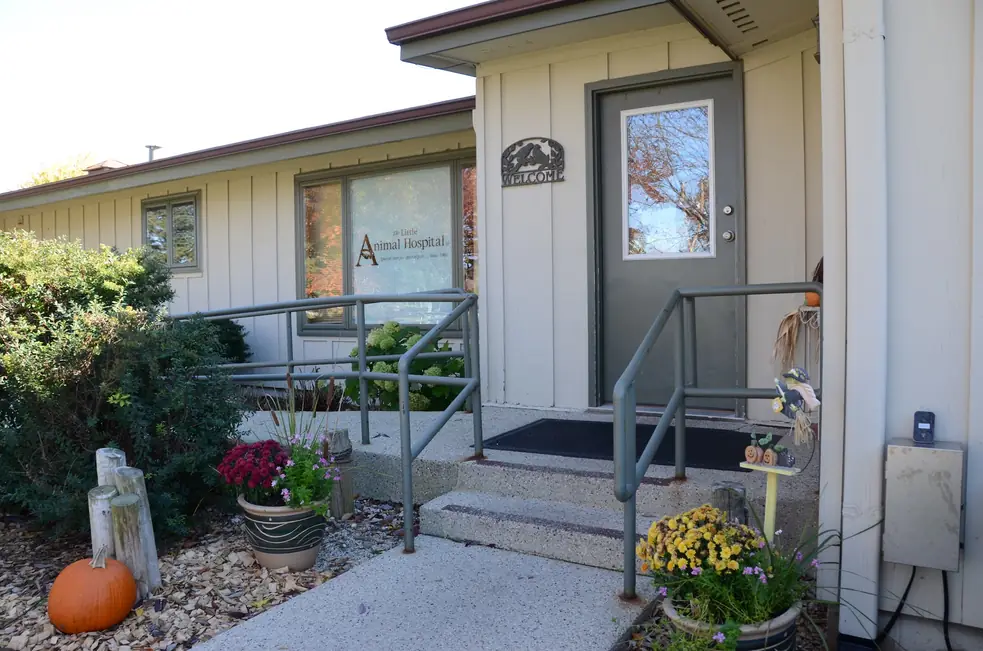
The Little Animal Hospital sits at 2590 Highway 32 in Port Washington, and the sign by the road is easy to spot. Leave early enough that you aren't rushing, because a hurried owner puts a pet on edge.
Inside, keep a cat's carrier on your lap or on a chair rather than the floor, and keep the towel over it. A cat on the floor sees every dog's nose at eye level. For dogs, a short leash and a corner seat away from the door can lower the temperature. If your pet is very anxious, ask when you call whether it makes sense to wait in the car until an exam room is ready. Not every pet needs that, but for some it removes the worst ten minutes of the visit.
Keep your own voice ordinary
Pets read tone faster than words. A bright, normal voice tells them there is nothing to worry about. A worried, apologetic voice tells them the opposite. Skip the long reassurances, hold the leash or carrier steadily, and let the team do their job.
Be honest if your dog has ever snapped, or your cat tends to scratch when handled. That keeps everyone safe, and it doesn't mean your pet is a bad patient. Many nervous animals are easy to work with once the people around them move slowly and speak softly.
After the visit
Head home and give your pet a quiet space, some water, and a reward. Write down anything the doctor said about food, medication or follow-up while it is fresh. If your pet needs a prescription or a special diet, the clinic's online pharmacy is linked from its website, and you can always call with a question.
To talk through a plan for your own nervous pet, call The Little Animal Hospital at (262) 284-0400 or send a message through /contact. The clinic is at 2590 Highway 32, Port Washington, and the team would rather hear that your pet is anxious ahead of time than find out in the exam room.
The Little Animal Hospital, (262) 284-0400
Call (262) 284-0400More articles
What a Yearly Wellness Exam Checks, Nose to Tail
A yearly exam is the best chance to catch small changes before they turn into big problems.
Pet Dental Disease: Signs at Home and What a Cleaning Involves
Our pets can't tell us when their teeth hurt, so the signs fall to us to notice.