Diagnostics and medicine
Diagnostics and medicine, done in house
Blood profiles, urine studies and parasite screens, plus digital x-ray, ultrasound, blood pressure and EKG, in Port Washington.
Chapter 01
Blood, urine and parasite tests that start the answer
When a pet is off its food, drinking more than usual or simply not itself, the first questions get answered with routine tests. The Little Animal Hospital performs blood profiles, urine studies and intestinal parasite screens, in their words, as a variety of routine diagnostic tests.
A blood profile gives the doctors a read on how the internal organs are working, and a urine study adds to that picture. An intestinal parasite screen looks for the worms and other organisms you cannot see in a stool sample at home, which is why it matters even when your dog or cat looks perfectly healthy.
Run on their own, none of these tests names a diagnosis. Together with the exam and what you have noticed at home, they tell Dr. Rollmann and the team whether to treat, to look further, or to simply watch and test again.
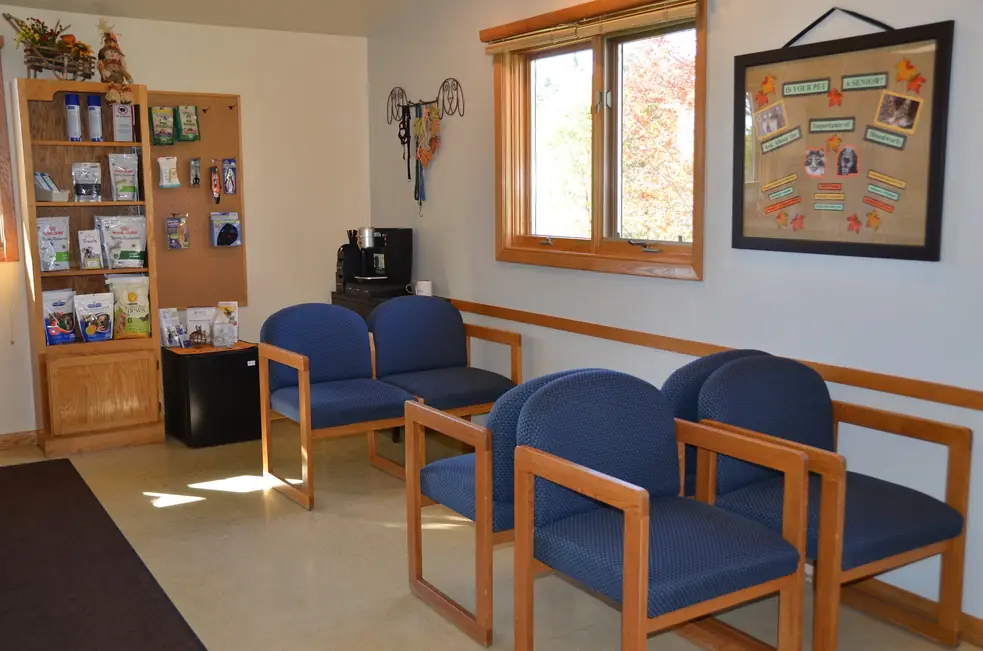
Waiting room with navy chairs, a food shelf and a board asking whether your pet is a senior
Imaging and monitoring on site: x-ray, ultrasound, blood pressure and EKG
Past the routine bench tests, the clinic lists additional diagnostic capabilities: digital whole body and dental x-ray, ultrasound, blood pressure and EKG. Having them under one roof on Highway 32 means a pet with a worrying cough, a limp or a swollen belly does not have to be sent across the county just to find out what is going on.
X-ray shows bones, the chest and many of the organs in the belly, and a dental x-ray shows what is happening below the gumline, where much tooth trouble starts. Ultrasound looks at soft tissue in a different way, and an EKG records the rhythm of the heart. Blood pressure is the quiet one, and it matters most in older cats and dogs.
Every one of these is a way of seeing rather than guessing. If you want to know which of these tests fit your own pet, call (262) 284-0400 and ask.
Chapter 03
Looking closer at growths and discharges, and when a specialist follows
The clinic also offers microscopic examination of abnormal tissue samples, discharges and growths. A lump found on a yearly exam, an ear that keeps weeping or a spot of skin that will not heal can often be looked at straight away, so you leave the visit with something real to act on instead of a wait.
Some cases need more than a general practice can offer, and a good vet says so early. The doctors here consult with board certified specialists at the University of Wisconsin veterinary school, and refer cases as needed for advanced care. Knowing that route exists is part of why the in-house tests matter.
In-house digital whole-body and dental x-ray, ultrasound, blood pressure and EKG.
After the results are in
Before any surgery, a pre-anesthetic blood profile is run to check internal health and anticipate risks. When a case needs someone beyond Highway 32, the resources page lists the specialists and emergency hospitals the clinic refers to.