Surgery
Spays, neuters and pet surgery
General surgery for dogs and cats in Port Washington, with blood work first and certified veterinary technicians monitoring every anesthetic.
Chapter 01
The procedures we do here, and the ones we send on
Our doctors perform general surgeries such as spays, neuters and growth removals. We also remove foreign objects from the digestive tract and stones from the urinary bladder. Other common procedures include treating abscesses and lacerations. At The Little Animal Hospital in Port Washington, these are the everyday operations of a family pet practice, done by the doctors who already know your pet from the exam room.
Before any surgery, you will be given instructions for the night before. Pets are usually asked to go without food for a set time, because an empty stomach lowers the chance of vomiting while a pet is under anesthesia. The exact instructions depend on your pet, so ask the staff when you book rather than guessing.
Some cases need more than a general practice can offer. When that is so, Dr. Rollmann says so plainly and refers the case on for advanced care, with the specialists named further down this page.
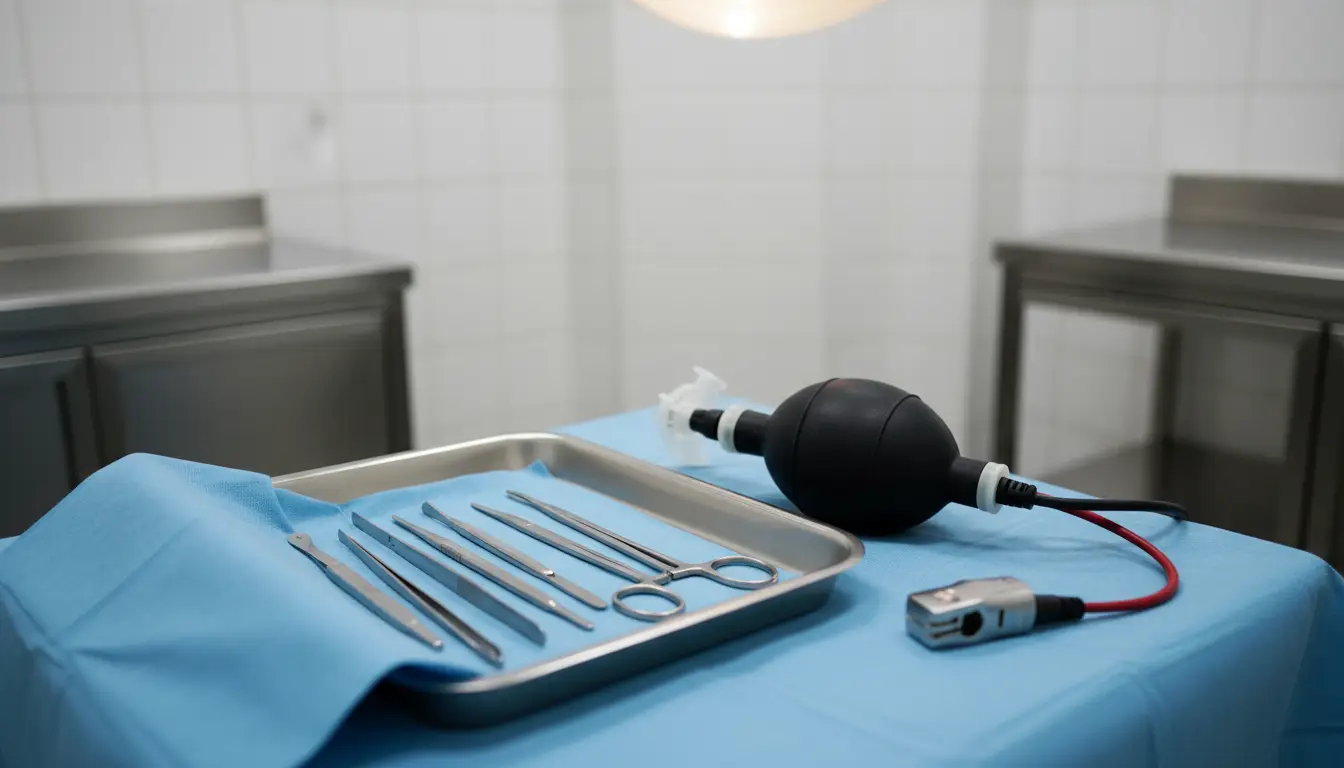
Stainless steel instrument tray on a blue sterile drape beside an anesthesia breathing bag
Blood work before anesthesia, and protocols built on an anesthesiologist's advice
Prior to anesthesia, it is very important to run blood profiles to evaluate internal health and anticipate potential risks. A pet can look bright and eat well and still have a liver or kidney problem that changes how anesthesia should be chosen and how much of it is safe. The blood profile is how the doctor finds out before the day, not during it.
We use anesthesiologist-recommended protocols and monitoring equipment. That means the plan for putting a pet under, keeping it comfortable and bringing it back out is not made up fresh each time. It follows what anesthesiologists recommend, and the monitors stay on for the length of the procedure.
Older pets and pets with a health history get the same careful look, and a longer conversation with the doctor about the plan for the day. Call (262) 284-0400 if you would like to talk through a planned procedure before you book it.
Chapter 03
Someone watching your pet before, during and after
Our certified veterinary technicians are responsible for monitoring the status of each pet before, during, and after anesthetic procedures.
That last word matters. The hours after the procedure, when a pet is waking up, are when a trained pair of eyes counts most, and it is why the technicians' job does not end when the last stitch goes in. When your pet comes home, the staff will go over aftercare with you. In general, an incision needs to be kept clean and dry, and a pet needs to be stopped from licking or chewing at it. If it looks red, swollen or is draining, call us.
We consult with board certified specialists at the University of Wisconsin veterinary school, and refer cases as needed for advanced care. Having those people a phone call away means a hard case in Port Washington is never handled alone.
Pre-anesthetic blood profiles are run before anesthesia at The Little Animal Hospital, 2590 Highway 32, Port Washington. Call (262) 284-0400 to ask about a procedure.
Before the day, and past it
Where the blood work and the specialists live
The pre-anesthetic blood profile is one of the in-house tests described on our diagnostics and medicine page, along with the imaging and monitoring we keep on site.
The specialists we consult and refer to, and the emergency hospitals nearby, are listed on our resources page. To book a procedure or ask about one, call (262) 284-0400.