Dentistry
Pet dental cleaning and extractions
Cleaning and polishing, treatment for periodontal disease, and extractions when a tooth has to go, for dogs and cats in Port Washington.
Chapter 01
Why pets hide tooth pain, and what you can see
Our pets can't tell us when their teeth hurt. A dog or cat with a sore mouth will usually keep eating, keep greeting you at the door and keep quiet about it, which is why dental trouble so often goes unnoticed for a long time. At The Little Animal Hospital in Port Washington, Dr. Rollmann and the team start from that fact: if the pet won't say it, the owner and the exam have to catch it.
The signs are small and easy to explain away. Bad breath that is more than ordinary pet breath. Food dropped from the mouth while eating. Chewing on one side only, or turning away from a hard treat the pet used to love. A brown crust along the gum line, red or swollen gums, or a pet that flinches when you touch the muzzle.
None of those needs to be dramatic before it deserves a look. If you have noticed even one, call (262) 284-0400 and tell Lisa on the phone what you have seen. It helps the doctor know where to look when your pet comes in.
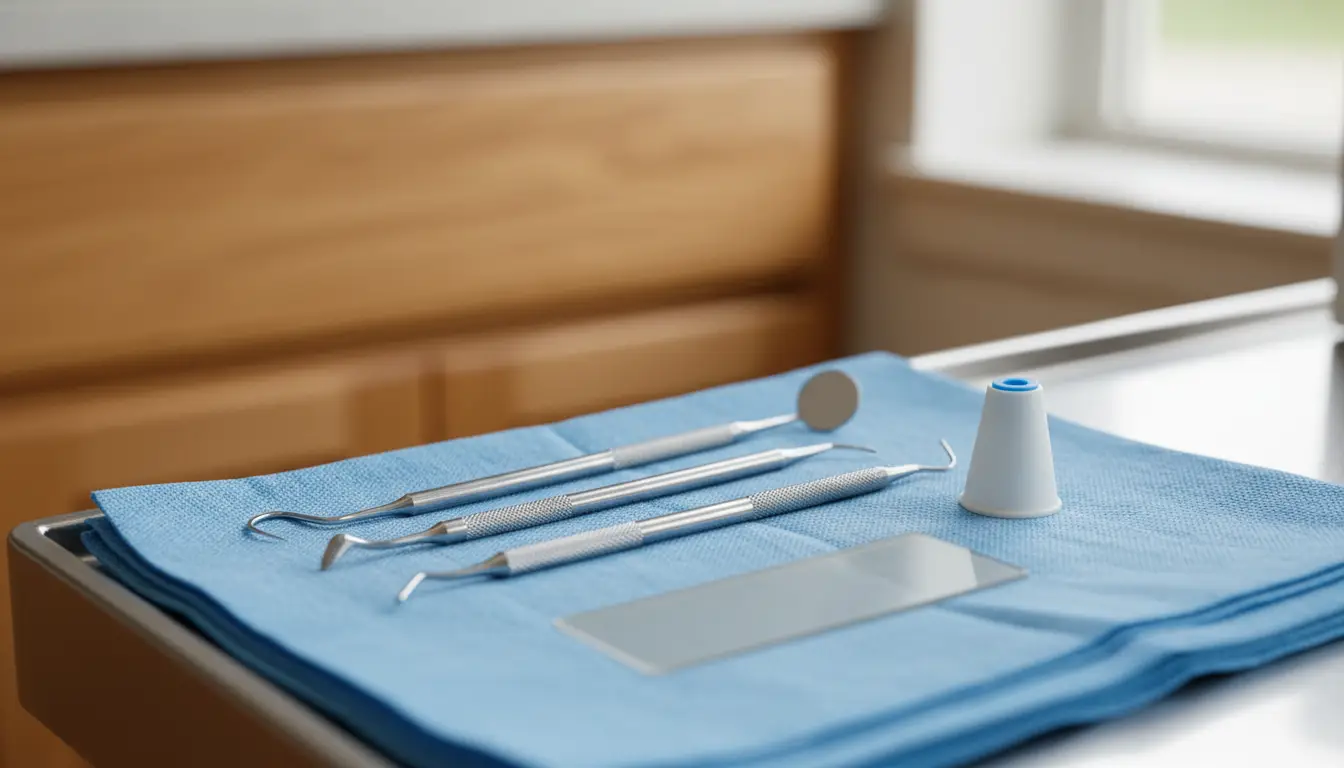
Dental scalers, a mirror and a prophy cup laid out on a blue cloth
Cleaning, polishing, and what happens when a tooth has to come out
To ensure good oral health, we perform routine dental cleaning and polishing. The part of a tooth that matters most sits under the gum, and no dog or cat will hold still and open wide while it is cleaned there. That is the plain reason a proper cleaning is done under anesthesia: the mouth can be cleaned thoroughly, the teeth polished smooth, and nothing is rushed.
We can also treat periodontal disease and perform extractions if necessary. Digital dental x-ray is part of what we have on site, and a picture of the root below the gum line is often what tells the doctor whether a tooth can be saved or whether taking it out is the kind thing to do. A pet that has lost a painful tooth very often eats better afterward, not worse.
Anesthesia is never a small decision, so the same care that applies to surgery applies here: blood work beforehand to evaluate internal health, and a certified veterinary technician watching your pet before, during and after the procedure.
Chapter 03
Brushing at home, taught by the people who clean the teeth
Our staff teaches dental home care programs for your pet, so what happens in the exam room carries on at home between visits.
Most owners are surprised how quickly a dog or cat gets used to a brush once someone shows them the first steps. Use a toothpaste made for pets, never human toothpaste, and start with a few seconds along the outer surfaces of the teeth, where tartar builds first. Ask one of the technicians to show you on your own pet and you will leave knowing how.
Dental care is also listed in the yearly wellness exam, so a mouth that looks fine this year gets looked at again next year. What your pet needs, and how often, is decided at the exam by the doctor who is looking in the mouth.
Digital whole-body and dental x-ray is on site at 2590 Highway 32, Port Washington. Call (262) 284-0400 to ask about a dental visit for your pet.
Where the mouth fits in the visit
Teeth are one part of the whole pet
A mouth is looked at during every yearly wellness exam, from nose to tail, and that is often where a problem first gets noticed. When a cleaning or an extraction is the next step, the anesthesia, the blood work beforehand and the monitoring are the same ones described on our surgery page.
Questions about the teeth of your own pet are easiest to answer by phone at (262) 284-0400.